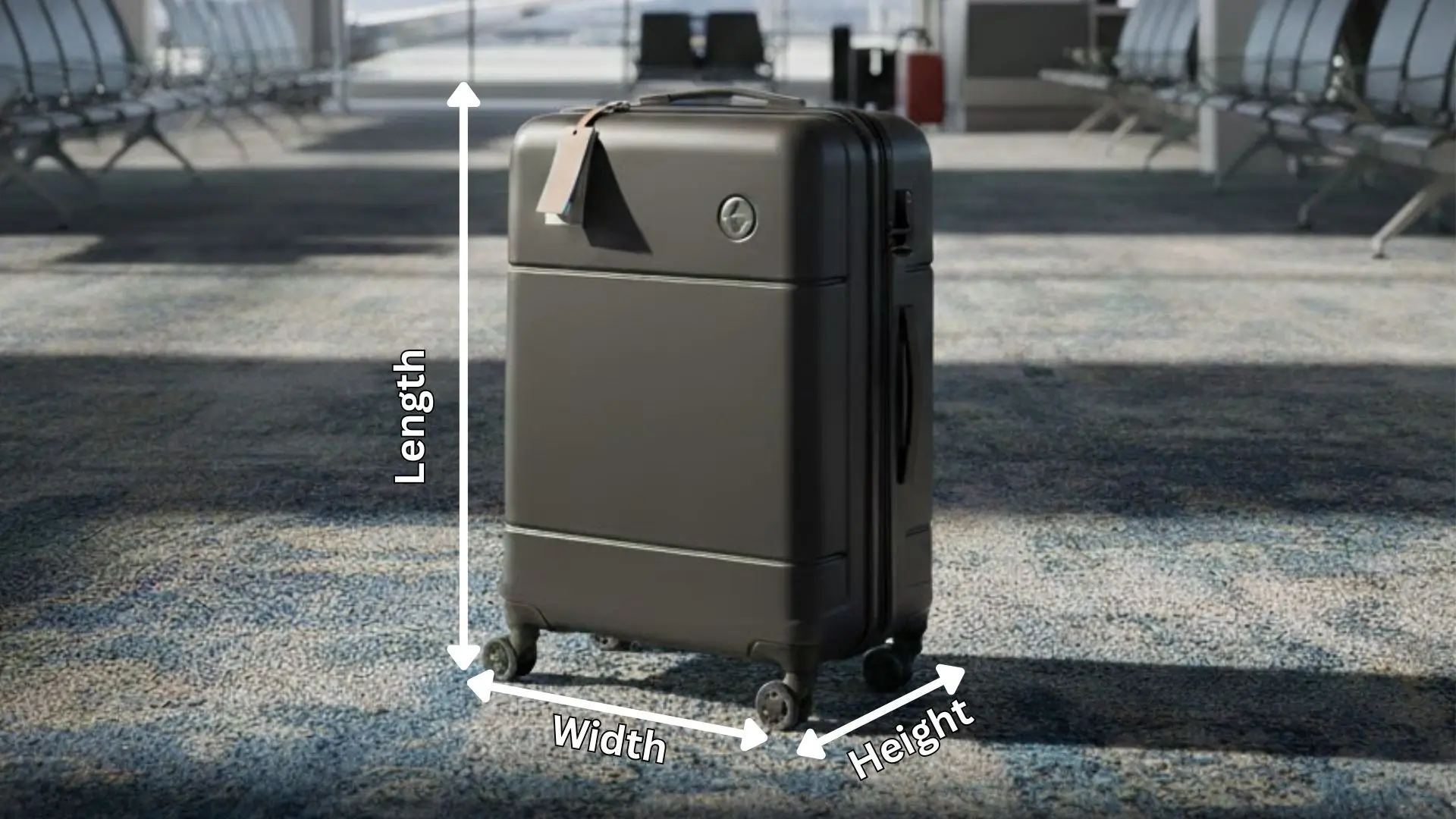
If you want one bag that works on most flights, size matters more than brand, style, or features.
While every airline publishes its own limits, clear patterns emerge when you compare the numbers. Based on our aggregated airline data, here are the most common sizes.
US Airlines: What Size Fits Most?
When you look across major and low-cost U.S. carriers, the overwhelming standard for carry-ons is:
22 x 14 x 9 inches
(≈ 56 x 36 x 23 cm)
This includes wheels and handles!
Of the ten most popular and most flown airlines in the US, six use 22 x 14 x 9 in as their dimension. In fact, no US airline is below that range. Southwest and Frontier, for example, allow carry-ons up to 24 x 16 x 10 in (≈ 61x 40.64 x 25.4 cm)!
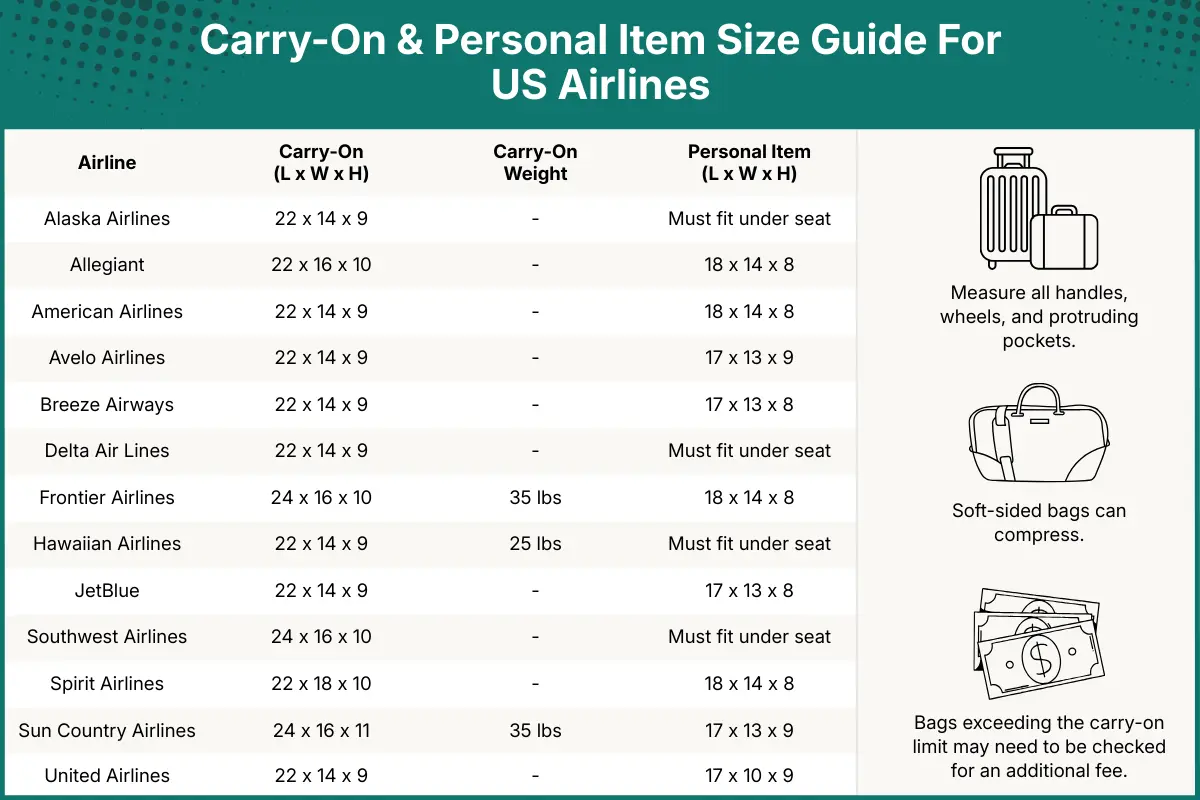
Click to enlarge.
If you choose a bag at or under 22 x 14 x 9 inches, it will fit on the majority of U.S. airlines without issue.
Personal Item: No Single Standard, But a Safe Range Exists
Personal item sizes vary more than carry-ons. In the US, limits commonly fall between:
- 17 - 18 inches tall
- 13 - 14 inches wide
- 8 - 9 inches deep
Delta Airlines doesn’t even offer personal item dimensions. As long as it fits underneath the seat in front of you, the size can vary
If you want something that works on most domestic airlines, aim for 17 x 13 x 8 in (≈ 43 x 33 x 20 cm). This is the smallest size any US airline provides.
What About Weight Limits
Most US airlines do not specify weight limits in their carry-on policy. The key factor is whether or not you can lift the bag into the overhead compartment yourself.
Some low-cost budget airlines, like Frontier and Sun Country Airlines will have weight restrictions of 35 lbs (≈16 kg) on their bags.
International Airlines: What Size Fits Most?
Once you leave the U.S., things tighten up.
International airlines, especially European and Asian carriers, often use slightly smaller limits and enforce weight more strictly.
Also, keep in mind most of them will only give dimensions in centimeters, so the inches are typically converted.
Of the 120+ international airlines we track, 20% have this dimension:
56 x 36 x 23 cm
(≈ 22 x 14.2 x 9 inches)
While this is the most common size, about 30% of the airlines are under that limit. A bag at that or slightly under is usually a safe bet.
International Personal Items: Even Less Standardization
International personal item limits vary widely depending on the airline and whether it is a bigger airline or budget carrier
A safe international-friendly personal item size is:
40 x 30 x 15 cm
( ≈ 16 x 12 x 6 in)
Weight Limits: The Major International Difference
In the US, carry-on weight is rarely checked. If you travel internationally often, weight matters just as much as size.
It’s common to see limits for your carry-on such as:
- 7 kg (15 lbs)
- 8 kg (17.6 lbs)
- 10 kg (22 lbs)
Make sure to always check your airline’s policies before you fly. Even if your bag fits dimensionally, exceeding the weight limit can force you to check it for an additional fee.
Even personal items can have weight limits. The most common are:
- 2 kg (4.4 lbs)
- 3 kg (6.6 lbs)
- 4 kg (8.8 lbs)
A lot of Asian airlines, like AirAsia have a total weight for both your carry-on and personal item.
The Difference Between “Carry-On and “Personal Item”
What makes your bag a carry-on or personal item is where it is stored on the plane. Carry-ons are in the overhead bins, while your personal item is stored underneath the seat in front of you.
Larger duffel bags and bookbags can be considered your carry-on. Surprisingly enough, you can also find small enough suitcases or luggage that can fit under a seat.
Know Before You Fly
If you’re unsure about your specific airline, it’s always best to verify before flying. Use the airline size checker to confirm before you pack.